The thing guests underestimate about a private chef is not the food. It is the absence of a daily decision.
On a normal beach vacation, somebody in the group is on their phone at 5:30 every afternoon trying to find a table for eight that is open, good, and not forty minutes away. Then everyone gets in cars. Then the kids melt down somewhere around the appetisers. That is four or five hours a day, every day, spent on logistics for a thing you do three times a day at home without thinking about it.
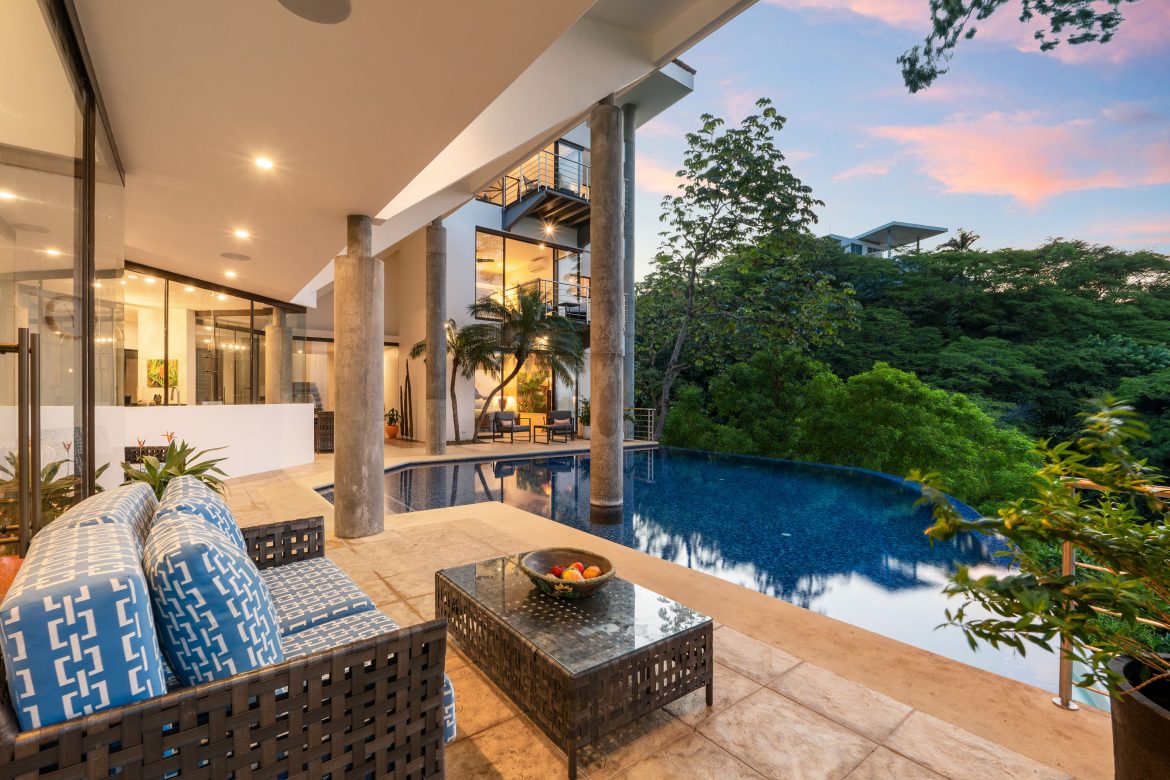
Here, dinner happens. You are on the terrace, the sun is going down over the Pacific, and somebody hands you a plate.
What a week actually looks like
Menus are built around what your group tells us and what came off the boat that morning, so this is an illustration rather than a fixed rotation. But it is a real week.
Arrival night. Something easy, because you have been travelling. Ceviche while you unpack, then grilled fish and rice. Tico ceviche is not Peruvian ceviche — the fish cures in lime for hours rather than minutes, sometimes overnight, with onion, sweet pepper, cilantro and garlic. It comes out firm and opaque rather than translucent. Corvina and shrimp are the standards.
Day two: casado, done properly. The national lunch plate — rice, black beans, a protein, salad, sweet fried plantain, maybe avocado and a tortilla. Ours usually comes with red snapper, which is landed just down the coast. It is the dish people are most surprised to love.
Day three: lobster. A question we get: is there a closed season? Not on this coast. Costa Rica’s Pacific lobster is regulated by minimum size, not by calendar — the March-to-June closure you may have read about is a regional rule for Caribbean spiny lobster, on the other side of the country.
Day four: the long lunch. Somebody always takes a day trip, so dinner goes light and lunch goes big — chifrijo, which the Tico Times fairly calls “the king of Tico bar food”: rice, beans, chicharrón and pico de gallo layered in a bowl with tortilla chips. It was invented in a San José bar and is now everywhere.
Day five: mahi. Dorado is most active in local waters from May through September, and the recreational-fishery data shows it trending up rather than down — one of the few good-news stories in sport fishing right now. If somebody in the group goes out with a boat from Coco, we cook what they bring back.
Day six: Guanacaste’s own food. This province has a cuisine distinct from the rest of the country, built on corn and cooked in clay ovens: arroz de maíz, rosquillas, tamal asado, cajetas. Most visitors never encounter any of it, because it does not appear on tourist menus.
Last night: whatever the group has decided it loves. By day six the chef knows. It is usually the snapper.
Breakfast is the sleeper
Gallo pinto — black beans and rice cooked together with onion, sweet pepper, cilantro and a shot of Lizano sauce, served with eggs and natilla. The name means “spotted rooster,” for the speckling. There are also chorreadas, fresh sweet-corn pancakes served with sour cream, which convert children instantly.
And coffee. A small correction to something people often say: Guanacaste is one of the eight official coffee regions recognised by ICAFE, though the growing happens up in the Nicoya and Tilarán highlands between 600 and 1,350 metres, not at sea level. The celebrated beans come from Los Santos — a lot from Copey de Dota sold for $200 a pound at the 2026 Cup of Excellence.
The bar
The bartender arrives in the afternoon, which is the correct time for a bartender to arrive.
The drink to try is chiliguaro: guaro, lime and hot sauce, taken as a shot. Guaro is sugarcane aguardiente — the name translates to something like “water that burns,” it runs 30 to 35% ABV, which is gentler than whiskey, and the cane for it is collected here in Guanacaste. Cacique is the brand everyone means.
Beyond that: Imperial, the national beer, brewed for over a century. Fresh fruit anything. Whatever your group asked for in the pre-arrival form.
What this would cost you outside
Worth doing the arithmetic, because it is not intuitive.
Costa Rica is the most expensive country in Central America — about $138 per person per day — and tourist-facing restaurants in beach towns charge close to US or European prices. Numbeo’s national average for a three-course dinner for two, without drinks, is around 25,500 colónes, roughly $57 at September 2026 exchange rates. Guanacaste beach towns run above the national average.
Then add the part that surprises everyone: Costa Rican restaurant bills carry 13% VAT and a legally mandated 10% service charge on top of the menu price. Call it a quarter more than you read on the menu.
Eight people, seven dinners, drinks included, at beach-town prices with tax and service — you are well into four figures before anyone has ordered a second bottle. And you still did the driving.
Dietary needs, kids, and the awkward asks
Send them. All of them. Vegetarians, the coeliac aunt, the six-year-old who eats four things, the guest doing something strict for a month. This is easier in a private kitchen than in any restaurant, and nobody is being brave about a menu at nine at night.
There is a pre-arrival form, and the more you put in it the better the week goes.
The honest pitch
Costa Rica is not a fine-dining destination. It ranked 85th of 100 on TasteAtlas’s cuisine list, and that is roughly fair. What it has is extraordinary raw material — fish landed that morning, fruit picked that week — and a home-cooking tradition that does simple things very well.
A private chef is how you eat the good version of that every night instead of hunting for it.